Residential Fellowships
The Humanities Research Center’s annual residential fellowships are awarded to 4-6 faculty members and at least one Ph.D. student per year.
The goal is to foster intellectual exchange and to enhance the quality of research at VCU by exposing faculty to different perspectives and methodologies. Fellows meet as a group once a week during the Fellows' Seminar to discuss their works-in-progress. Fellows are given the opportunity to give public presentations about their projects during the academic year following their residency at the Center. Publications resulting from this fellowship program must acknowledge the Center’s support.
Applications are now open for the 2027-28 academic year. The theme is Repair.
2026-27 Residential Fellows
Massa Lemu
Associate Professor of Sculpture + Extended Media, VCUarts
“A Thousand Ways to See the Malawian Dugout Canoe”
 “A Thousand Ways to See the Malawian Dugout Canoe” constitutes a series of collages inspired by the aesthetics and materials of the repaired dugout canoe. Created in 2023 with Ozhopé collective, the collages are composed of photographic images of the rich textual surfaces of the Malawian dugout canoe, which we have gathered since 2017, nailed and glued to driftwood and other material such us nets and cork found on the shores of other water bodies such as Lake Geneva and the Mediterranean. The technique of collaging the different materials is inspired by Malawian fishers' methods and materials of repairing the dugout canoe. The fishers’ method of patching turns the dugout canoe into a beautifully textured and textual surface, carrying multiple stories of communities on the shores of Lake Malawi and of the larger Malawian society. Our scrolls therefore bring into conversation Malawian stories and those of other lacustrine regions to highlight the ecological, social, and political linkages between these distanced geographical locations. Specifically, the collages re-present Malawian ecologies of recycle and repair.
Mary Caton Lingold, Ph.D.
Associate Professor, Department of English | Director, PhD Program in Media, Art, and Text
“Engaging the Past to Repair the Present? On History, Memory, and Slavery, Now”
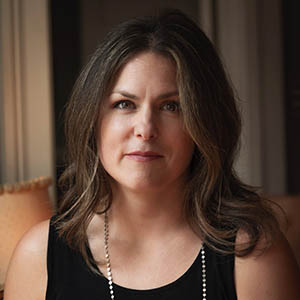 This project grapples with what it means to engage the past in the present. What responsibility do we have to know what came before, and to be stewards of that information? How can engaging with the past be transformative for people in the present? In some respects, a philosophy of history, this book-in-progress also responds to the way that histories of early America and slavery have changed in the last few decades. The project will be anchored in my point-of-view as a white U.S Southerner, an educator and scholar of slavery, and a resident of Richmond, Virginia in the post-Covid era.
Daniel Morales, Ph.D.
Associate Professor, Department of History
“The Latino Virginia Project”
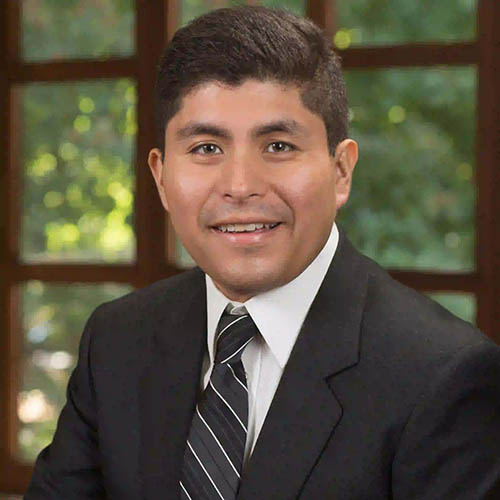 During the 2026–2027 academic year, I will begin writing a book based on the Latino Virginia Project, a collaborative research and public humanities initiative that documents the migration, integration, and community-building experiences of Latinos in the Commonwealth of Virginia. The project has collected more than one hundred oral histories with immigrants and U.S.-born Latinos across the state, many recorded by VCU undergraduate researchers trained in public history and qualitative methods. These narratives reveal how Latino communities—often invisible in Virginia’s historical record—have built lives, institutions, and relationships. The book will use these oral histories to explore how Latinos are making new lives in the state, and organizing politically.
Emilie Raymond, Ph.D.
Professor, Department of History
“Repairing the Wounds of War: Virginia and the Vietnam War”
 The last U.S. combat troops left Vietnam on March 29, 1973; South Vietnam surrendered to communist forces on April 30, 1975, thus ending a long, costly and polarizing war. Over fifty years later, public perception of the Vietnam War continues to be shaped by disappointment and cynicism, effectively undermining interest in those who experienced it. This project will highlight the voices of Virginia’s veterans and South Vietnamese refugees, as well as Virginians on the home front, impacted by the war. By using untapped archival sources, particularly letters and oral histories, it will reveal an unappreciated human side of the war that sheds new light on their experiences. The HRC fellowship will support ongoing research and the production of two works: a traveling banner exhibit in cooperation with the Virginia War Memorial Foundation’s “Salute to Service” veteran reunion series and an edited collection of primary sources. Both efforts seek to address and repair the wounds of the combat and controversy experienced by Virginians impacted by the Vietnam War, and educate later generations about the conflict.
Sachi Shimomura, Ph.D.
Associate Professor, Department of English
“Enduring Death: Old English Saints’ Bodies and Community Memory”
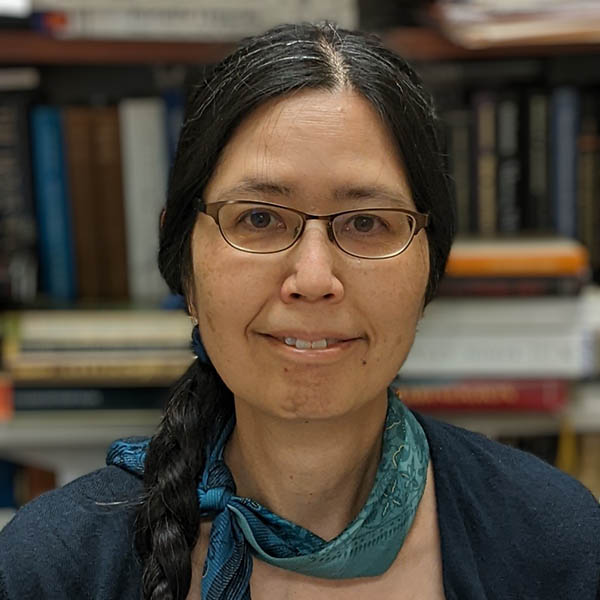 My project, focusing on a pair of chapters for my manuscript “Enduring Death: Old English
Saints’ Bodies and Community Memory,” analyzes how community memory and monuments, including the sites of saints’ bodies and the traditions that accrue around them, help repair rifts of community or belief, or the cultural breakdowns in monasteries struck by the plague. In particular, Bede’s Historia Ecclesiastica, relating the history of Christian conversion in early medieval England, deliberately focuses on dead and dying holy bodies to sustain not only miracles, but community continuity through their memory. Bede presents narrative and properly conceived memory as ways to repair lapsed spirituality, or memorialization as a process of social remedy. Recent archaeological studies have suggested methods by which funeral sequences, grave mounds, and cemeteries rewrite the landscape as well as the identity of the deceased in relation to the community. Analyzing the community-based processes of memory-making within Bede’s and surrounding Old English narratives, I seek to recuperate how medieval audiences would have understood these scenes. The project draws upon such recent work in disciplines including archaeology, art history, and cultural studies, as well as health humanities approaches to death, suffering, healing, memory, and community health.
Yiwen Wei, Ph.D.
Assistant Professor and Graduate Program Director, Department of Art Education, School of the Arts
“Repair, Restore, and Recreate with Family and Community: A Participatory Art Project on Cultural Hybridity”
 This community-based participatory art project explores the concept of cultural hybridity through the lived experiences and storytelling of Richmond, Virginia, residents. It consists of interviews and artmaking, focusing on how participants and their families collaboratively reinterpret their cultural heritage through repair, restoration, and recreation. This project will invite participants and their family members to bring a family artifact (e.g., photographs, heirlooms, or objects) connected to a significant family event and share the stories surrounding it. From these dialogues, each group will co-create an artwork that reflects emerging themes from their storytelling—such as family trauma, restoration and healing, or the celebration of hope and resilience. Both the interviews and the artmaking processes will be video-documented to create short documentary films. Alongside these films, their artworks will be exhibited in local libraries to spark dialogue with broader community audiences. The project seeks to explore how individuals navigate between American mainstream culture and their inherited cultural traditions. It challenges the notion of fixed, homogeneous identities by emphasizing cultural fluidity—how cultural practices evolve through exchange, adaptation, and fusion, blending elements from diverse backgrounds to create something new.
Previous Fellows
Chris Cynn, Ph.D., Department of Gender, Sexuality, and Women's Studies
"Archives from the Future: Imagining Otherwise in Ugandan and South African Texts"
I propose to draft a chapter of my book, Archives from the Future: Imagining Otherwise in Ugandan and South African Texts. The chapter, “Revising the Past: Mary Karooro Okurut’s The Invisible Weevil and Jennifer Nansubuga Makumbi’s Kintu,” explores how The Invisible Weevil (1998), and Kintu (2014) engage with Intense debates in Uganda around state attempts to regulate sex and sexual practices, especially through HIV prevention campaigns emphasizing abstinence and fidelity, and through draconian legislation targeting “homosexuals.” While state policies invoke specifically African traditions to reinforce their contemporary definitions of family, and therefore of communal and national identities and belonging, the novels insist on the crucial role of literature in documenting and remembering ways of living that exceed such authorized accounts. Irreducible to anthropological evidence or historical record, they reframe temporality and causality, merging past and present, history and myth, the supernatural and the rational, philosophy and critique. Underscoring the limits of the terms of the promise of (post)coloniality, they raise awareness about the racial and gendered inequities limiting whose stories are told and preserved and challenge dominant epistemologies to open possibilities for alternative potential futures.
I will respond to these shifts by composing an article-length flagship journal article that constructs a fresh paradigm for specifically digital rhetoric, toward creating and formalizing contemporary, user-generated tactics for such actions as argumentation, reading, and relating. Building on the influential rhetorical situation debate from 1968-2005, I will reframe what rhetoric entails while providing different tools. Examining such phenomena as the rise in conspiracies, the appropriation of academic terms like “othering,” and the increase in people opting for ‘private’ communication channels, I will suggest that a productive paradigm for rhetoric could be repair: reframing rhetoric as a practice of restoration turns rhetoric toward a collective pursuit of defying Big Tech’s capitalist logics.
Sasha Waters Freyer, Professor, Department of Photography + Film, School of the Arts
“Mary Oliver: Saved by the Beauty of the World"
I will work on editing and iterating conversations and dialogue around a feature-length documentary film in progress, Mary Oliver: Love the Mystery – a portrait of the fearless poet of the natural world, Mary Oliver (approved by her estate). The film is slated for broadcast on the national PBS series American Masters in the summer of 2026. A writer from the age of 13, Mary Oliver was born of Transcendentalism and Romanticism inspired by Emerson, Whitman, and Shelley. She was also shaped by her experience of childhood sexual abuse – which she did not share publicly until her 70s – her queerness, and her radical self-acceptance. Yet Oliver cannot be easily fixed with labels like “ecopoet,” or “feminist,” and she was, paradoxically, a deeply spiritual poet unaffiliated with any specific religion. Mary Oliver challenges many of the traditions associated with poets of the natural world – her body of work provides quiet resistance to American individualism, sentimentalism, and ingrained taboos around illness, disability, and death. She has recently had an enormous impact on a new generation of readers, one that is especially open to healing personal and generational trauma by cultivating joy as a means of survival. It is these intergenerational questions raised by her vast body of work that I wish to think through and about in community.
Ramin Fazeli, Ph.D. Candidate in the Media, Art and Text Program
“Elusive Past, Haunted Future: Cinema of Asghar Farhadi”
Asghar Farhadi's cinema serves as a powerful exploration of socio-political, cultural and ethical complexities in contemporary Iranian society, appealing to both local and global audiences. His films, such as A Separation and A Hero, delve into moral dilemmas, gender dynamics and the tension between public and private life, marking a shift from the allegorical style of earlier Iranian filmmakers. This project examines how Farhadi's films negotiate complex ethical issues, gender dynamics, and the socio-political environment shaped by censorship and international pressures. It addresses gaps in scholarly discourse, particularly in the intersection of Farhadi's work with queer theory, gender studies, and transnational cinema. Utilizing an interdisciplinary methodology, this study aims to provide nuanced insights into Iranian cinema and gender representation, challenging conventional understandings while enriching film theory. Expected outcomes include publishing the dissertation as a book, contributing to academic scholarship.
Mary Strawderman, Ph.D. Candidate, L. Douglas Wilder School of Government and Public Affairs
“Exploring Equity and Excellence: A Mixed Methods Study of Research Funding Disparities and Success Among Women Faculty of Color at a Research-Intensive University"
This fellowship will provide support for the second phase of an explanatory sequential mixed-methods study aimed at investigating the effects of cumulative advantage and the impact of gendered and racialized structures and processes on research funding inequality in academia through an intersectional framework. This phase involves conducting semi-structured interviews with successful individuals who belong to groups that face negative funding outcomes in order to catalog strategies and lived experiences through phenomenological inquiry.
Metainferences are drawn through the integration of the quantitative and qualitative strands, allowing a view of research funding inequalities to be contextualized by the personal narratives of successful faculty from historically underfunded groups. Information derived through this study describes factors interrelated with inequality and bias in competitive funding processes that reflect broader societal dynamics of power and privilege; analyzes elements and behaviors that underpin success; and suggests policies and procedures that address inequities within the distribution of research funding.
Caddie Alford, PhD, Department of English
"Rhetorical Restoration: A Paradigm of Repair for the Aftermath of Digitality"
A rise in fascism, reactionary responses, and fraudulent content signals that rhetoric is in disrepair from the fallout of ubiquitous digitality. Rhetoric’s previous goals of democratic consensus and identification now seem difficult or almost impossible to achieve or conceptualize. What was once considered rhetorical practice no longer makes sense because discourse now forms in corporate platforms, and as for socializing, proprietary algorithms wall us off from one another. Rhetoric needs an audience, but now that audience includes omniscient surveillance. The rhetor must find the available means of persuasion, but now those means are preprogrammed.
I will respond to these shifts by composing an article-length flagship journal article that constructs a fresh paradigm for specifically digital rhetoric, toward creating and formalizing contemporary, user-generated tactics for such actions as argumentation, reading, and relating. Building on the influential rhetorical situation debate from 1968-2005, I will reframe what rhetoric entails while providing different tools. Examining such phenomena as the rise in conspiracies, the appropriation of academic terms like “othering,” and the increase in people opting for ‘private’ communication channels, I will suggest that a productive paradigm for rhetoric could be repair: reframing rhetoric as a practice of restoration turns rhetoric toward a collective pursuit of defying Big Tech’s capitalist logics.
Julian Kevon Kamilah Glover, PhD, MPA, Department of Gender, Sexuality, and Women’s Studies
“Black Boundlessness: Performance, Ethics and Aesthetic Under Duress"
This project culminates as a book that chronicles processes of personal and interpersonal transformation and emphasizes the world-making practices that Black people use to create a meaningful life in spite of the influence of numerous systems of oppression. Specifically, I argue that the contradictory, complex and capacious nature of Black life offers Black artists and everyday people an opportunity to establish freedom practices that conjures an ethics which supports individual rehabilitation, the cultivation of intentional communities and generative possibilities beyond societally imposed constraints and boundaries. The book uses a mixed methodology (qualitative interviews, textual and lyrical analysis) to investigate freedom practices including multiplicity, transmutation (shapeshifting) and critical nonmonogamy—all of which offer strategies, tactics and tools that Black people use to imbue life with significance in ways that do not privilege assimilation. The book engages the creative work of artists including Moses Sumney, Yves Tumor, Audre Lorde, Taiye Selasi and Akwaeke Emezi in addition to interpersonal relationships among quotidian Black people across the U.S., Vancouver, Canada and London, England to reveal how diasporic freedom practices manifest around the world.
Ying-Chao Kao, PhD, Department of Sociology
“Transtopia in Trans*-formative Education: Trans-locally Comparing the Institutions and Practices of Gender Equity, Pronouns, and Indigenous Justice in Virginian and Taiwanese Democratizations”
As over 30 countries legalized same-sex marriage, American and global conservatives have shifted their cherry-picked “wedge issue” from marriage equality to policies against LGBTQ youth and students. What constitutes and (re)produces the ongoing transphobic attacks? How can we learn from the hope, joy, and resistance of global trans* and non-conforming actors to reimagine the possibilities of transtopian futures? This research employs Sinophone historian Howard Chiang’s “transtopia” theory to decolonize the socio-history of Euro-American-centric cisnormative orders, deconstruct essentialist categories of gender and sexualities (including transgenderism), and decenter both Americanness and Chineseness that dominate the worldview of trans-related histories and hierarchies. This project expands from my current Taiwan-focused book chapter, and further selects Virginia State and Taiwan for trans-local comparison and transnational mutual-learning to explore a variety of opportunities of transtopia as the “antidote” to transphobia across borders (Chiang 2021:5). 1 This trans-Pacific comparison focuses on three dimensions: (1) trans*-inclusive education institutional designs and practices of LGBTQ-inclusive curricula and instruction; (2) the (gendered, de-gendered, re-gendered) pronoun practices beyond English-language-centrism; and (3) indigenous nations’ marginalized gender/sexual traditions and cultural appropriation in both Virginia State and Taiwan. Forty interviews with local experts, educators, and indigenous Peoples will be conducted for trans- local comparison (20 in Virginia and 20 in Taiwan). This research will produce an assemblage of cross-cultural opportunities to resist transphobia, cisnormativity, transnormativity, and gender binarism multi-dimensionally and poly-chronically. This project with transnational comparative edges also helps to decenter the dominant perspectives of gender, sexuality, and power that both American White supremacism and Han-Chinese ethnonationalism imposed upon trans* and gender non-conforming bodies, knowledge, spirituality, and collectives through re-centering the bottom-up practices and imaginations of various futures of democratizations and gender equity/equality.
Sarah E. Raskin, PhD, MPH, L. Douglas Wilder School of Government and Public Affairs
“Structural Racism in U.S. Professional Dentistry, 1815-present”
My project considers how structural racism—or the written or unwritten policies, institutional practices, and entrenched beliefs, attitudes, and norms that “scaffold” the unjust treatment of racially minoritized patients and providers—is not merely contextual or coincidental to the history of professional dentistry and the social significance of teeth but, rather, is constitutive of them. Drawing together eclectic resources from the histories of U.S. dentistry and popular culture, and scholarly literature, I will explore the persistence of racialized concepts, policies, and practices in U.S. dental professional history; consider how popular and commercial notions of home hygiene; oral health services; and dental esthetics have reflected racialized ideas about beauty, character, and morality; and assess the future of anti-racism in U.S. professional dentistry.
Jessica Trisko Darden, PhD, Department of Political Science
“The Accused: How Women Escaped Justice for Nazi-Era War Crimes”
The Accused: How Women Escaped Justice for Nazi-Era War Crimes challenges current understandings of Nazi war crimes and post-war justice by focusing on the hundreds of women prosecuted in German courts between 1945 and 1982 for crimes ranging from euthanasia to violent crimes in concentration camps. I demonstrate that women were acquitted at a higher rate, received lighter sentences, and were more successful on appeal than the men prosecuted alongside them. Nazi women benefited in the courtroom from societal biases that see women as less capable of and less responsible for harm. The extent and implications of this gender imbalance have not been recognized in existing research on Nazi war crimes trials. The resulting book and public website shed new light on women’s involvement in the Holocaust, how Germany’s post-war justice systems reflected and reinforced gendered understandings of Nazi criminality, and the implications of these historical failures for contemporary war crimes prosecutions of women.
Jatia Wrighten, PhD, Department of Political Science
“Oppression Made Us Leaders: Black Women, Heavy Lifting, and Leadership”
The purpose of this book project is to apply a novel intersectional framework, the heavy lifter theory, to leadership attainability in state legislatures. It is a logical and unique way to examine the gender ascription of Black women. This work helps to shed light on the political behavior of Black women, the institutional obstacles they face, and the lasting power of ancestral talent development.This research presents a historical context by which to understand and examine the gendered nature of the ascription process of Black women. Specifically, their experience as a marginalized group burdened them with the duty of the heavy lifter. Although being the heavy lifter is a burden, this focus on Black women’s ability to thrive under constant discrimination in the form of racism and sexism should give scholars pause. In looking at Black women legislators’ ability to gain leadership, the heavy lifter identity can potentially be a vehicle through which Black women legislators can find a sense of purpose and both psychological and social strength to forge their own unexpected path.
Rian Johnson, PhD Candidate in the Media, Art and Text Program
“The Fantasyscape Quotidian: On Life in Other Worlds”
The Fantasyscape Quotidian” is a dissertation exploring the ways in which single-player, high
fantasy, role-playing video games represent and simulate everyday life and quotidian experiences in worlds that are not our own. Following theories of the everyday, non-mimetic fiction, and video games and agency, this work aims to lay a groundwork for approaching the mundane and the non-epic within fantasy works and provides a close reading of four games with the belief that there is a radical, liberatory, or affective potential to exploring and experiencing other ways of living.
Grace D. Gipson, PhD, Department of African American Studies
"Creating 'New Normals' within Black Womanhood and Disability in Marvel Comics 'Misty Knight'"
Given the insufficiency of Black women and disabled protagonists in the popular arts and media, representations are particularly important as visualizing them contributes to their normalization (it un-others them, respects their otherness, and potentially destigmatizes otherness). As a scholar whose interests explore new territory surrounding Black female narratives in popular culture, particularly comic books, this project/chapter advocates for positioning disability as an empowering ability [not a weakness] through an exploration of the Marvel Comics character, "Misty Knight." Despite recent academic scholarship on comics and disability, narratives surrounding race and gender, specifically those featuring Black female characters are not as prevalent. In particular, Misty Knight's story provides a narrative that disrupts Rosemarie Garland-Thomson's argument that "female, disabled and dark bodies are supposed to be dependent, incomplete, vulnerable, and incompetent bodies that are portrayed as helpless, dependent, and weak." Depicting disability, from a Black woman’s point of view, as a part of one’s identity helps to normalize and humanize the character’s narrative, and potentially re-situate the gaze. Moreover, as an able-bodied Black woman, I aim to act as a scholarly ally who contributes to deconstructing hegemonic narratives that exclude Black, female, and disabled narratives in comics and beyond. Thus, this chapter examines the experiences of Black women superheroes' experiences with disabilities, such as Misty Knight, and offers an opportunity to investigate how fictional representations of Black women in comics act as archetypes of empowerment for real-life disabled Black women.
Adin E. Lears, PhD, Department of English
“Vital Flesh: Scales of Nature and Creature Futures in Later Medieval England"
Vital Flesh: Scales of Nature and Creature Futures in Later Medieval England offers a previously unexamined premodern history of life force, shifting the terms of contemporary feminist ecocritical and new materialist theories toward philosophies of health and practices of care. In the cultural and social foment of England in the wake of the Black Death, authors from Julian of Norwich to Geoffrey Chaucer imagined new ways of being, understanding, and expressing the liveliness of the flesh: historically understood as an antithesis of spirit in Western Christianity. Ranging across intellectual contexts, from natural philosophy and medicine to theology, Vital Flesh examines the medieval discourses of liveliness and probes their literary and social effects among writers and thinkers in late medieval England. In certain theological and philosophical contexts, medieval thinkers rigidly deployed the idea of the scale of nature: the hierarchical structures of being and knowing that have historically produced and reinforced conceptions of the human. Their conflation of the physical and the moral inform an Enlightenment logic of liberal individualism in ways that continue to undergird inequities in health care, even in the present day. At the same time, the literature and life writing of late medieval England afforded others the opportunity to consider how the scale of nature might offer more fluid conceptions of life, death, and selfhood that speak to our own moment of crisis: environmental peril, the erosion of abortion rights, and the epidemic of deaths of despair. The premodern history I draw from later medieval English literature amplifies how to reorient attention toward ways of organizing human and non-human relations that are not grounded in the hierarchical verticality of the scale of nature. For medieval thinkers, poetry—the matter of language—was crucial in this regard, helping readers to feel, imagine, and acknowledge the creaturely nature of human life, amplifying literature’s social and ethical purpose today.
Gabriela León-Pérez, PhD, Department of Sociology
“Invisible No More: Understanding the Health and Well-Being of Indigenous Immigrants from Latin America in the US”
There are approximately 1 million Indigenous immigrants from Latin America living in the US. While Indigenous peoples have historically comprised an important part of migration streams around the world, they are substantially underrepresented in the migration and health literatures. Indigenous migrants embody multiple statuses of marginalization (e.g., minority among minorities, undocumented, poor) which have direct and indirect impacts on their health and well-being. However, their health status and health care needs have received limited attention from policymakers, medical practitioners, and academics alike. Indigenous immigrants are rarely distinguished from other foreign-born Latinxs and, consequently, their perspectives, needs, and concerns have been obscured and have occupied a marginal place in policy and scholarly conversations. This project involves conducting a scoping review of the literature on the health and well-being of Indigenous immigrants from Latin America in the United States. The overall goals will be to (1) evaluate current knowledge on Indigenous immigrants’ health and well-being, (2) summarize findings related to how systemic conditions contribute to Indigenous immigrant health disparities, and (3) highlight findings on protective factors, including the role of Indigenous migrant communities and their traditional health systems.
Victoria Tucker, PhD, RN, VCU Health System
“Position, Power, and Identity: Black Nurses in Virginia, 1950s-1980s”
My research examines the important but largely unchronicled moment at the intersection of American and nursing history: the experiences and contributions of Black nurses in Virginia during the transition from segregation to desegregation. Expanding the intellectual boundaries of the current nursing history canon adds to a more comprehensive history of healthcare by reassessing which nurses’ stories are learned, celebrated, and acknowledged. Black nurses were central figures in the desegregation of the United States healthcare system and the move toward health equity in the 20th century. Personal accounts of Black nurses’ coming of age narratives, professional pursuits, and legacy within a central locality are rare. The oral histories center Black women’s voices and provide unmined memories told from their perspectives. A detailed exploration of Black nurses in Virginia not only brings a new lens to an underexplored area of the history of nursing and health care, but it can also help identify and dismantle discriminatory policies and practices from which health disparities arose.
Kai Bosworth, PhD, School of World Studies
“Grottograph: Mapping the intimate social relations of cave conservation”
Debates in the environmental humanities have critically assessed the potential and shortcomings of declaring “the Anthropocene” era--the supposed entry of humanity writ large into the Earth’s geological record. But the seeming exceptionality and planetary scale of both declarations and debates can obscure the more mundane and intimate scales of human care for underground features and ecological spaces, whether human-made or natural. With support from the HRC, I will develop key aspects of a new research project which examines environmentalist and environmental justice politics of underground spaces in the US: caves, mines, urban infrastructure, aquifers and sinkholes, and abandoned oil and uranium wells. If ecology has conventionally relied on relationality, phenomenological experience, and/or defense of life as motivating frames, how do activists develop emotionally-rich meanings and motivations to defend spaces that are characterized by separation, non-life, and the inability for humans to experience or access them? While this is a long-term and multi-sited research project, my residency at the HRC will be used to develop an initial publication resulting from fieldwork conducted in the summer of 2022 with the Paha Sapa Grotto and the Black Hills Cave and Nature Conservancy concerning cave conservation in South Dakota.
Kathleen Chapman, PhD, Department of Art History, School of the Arts
“Wild, Domesticated, Modernized: Animal Art in Wilhelmine Germany”
As more art historians begin integrating ecocritical and related environmental humanities-based approaches into their analyses of works of art, they tend to concentrate on contemporary art. This focus is perhaps unsurprising, given the significant number of practicing artists who address environmental concerns in their work. As a specialist in German modernism, however, I focus on much older artworks that may, at first glance, seem merely to present many of the troublingly anthropocentric assumptions about non-human animals and the natural world that have pushed us toward the catastrophic consequences of human-driven climate change. I argue that re-examining modern art by drawing on interdisciplinary approaches of environmental humanities scholarship can show us more than examples of destructive, objectifying conceptions of animals. Such historical work highlights how art produced under planetary conditions far less threatening than today’s can offer insights into modes of understanding and relating to animals that can inspire new ways of interacting with animals in the present. I highlight histories of inter-species entanglements as these connections are celebrated, denied, or simply registered in the works of selected artists. These artworks remind us that there is no purely human history, no purely human culture—history and culture are always comprised of both human and non-human agents.
Rocío Gomez, PhD, Department of History
“From Peru to Pittsburgh: Vanadium Mining, Toxic Legacies, and Extractive Colonialism”
By the 1940’s, the Vanadium Corporation of America (VCA) owned the majority of vanadium lodes around the world. Based in Pittsburgh, Pennsylvania, the company supplied the metal to steel mills in the city as well as its experimental laboratory. While historians of the environment may view the VCA as US-based corporation that contributed to the steel boom, they neglect the extractivist colonialism in Peru the company engaged in the creation of a vanadium monopoly. A metal added to make steel more flexible, the vanadium lode of Mina Ragra in the Peruvian Andes proved to be its crowning jewel. USGS geologists and scientists alike flocked to the region to aid in the exploitation. Local miners participated in the extraction process while waiting scientists in Pittsburgh received shipments of vanadium. This article (and book chapter) explore the exploitation of Mina Ragra, the role of toxic legacies of vanadium, and the infrastructure created to facilitate extraction. This transnational history of the environment, mining, and chemistry underscores the borderless character of extraction as well as its toxic legacies through archival materials, industry newsletters, and images.
Jennifer Rhee, PhD, Department of English
“The Ecological Materialities of Artificial Intelligence in the Racial Capitalocene”
My project will argue for a definition of artificial intelligence (AI) that accounts for its ecological environmental harms. I will connect the racialized hierarchies extended by predictive AI technologies, imbricated as they are in racial capitalism, to their unevenly distributed environmental impacts and the devalued and often dangerous human labors that structure AI’s global supply chains. Working at the interdisciplinary intersection of feminist science and technology studies, ecocritical media studies, and critical AI studies, I will provide a detailed account of an AI system’s global supply chain, from mineral mines in the Congo and the U.S., manufacturing factories in China, server farms throughout the U.S. and Europe, and massive e-waste sites in Ghana and Pakistan. I will also bring this account of a supply chain into conversation with literary and artistic works that conceptualize AI around supply chain labors, e-waste, toxic pollution of mining and manufacturing sites, and climate change. I will highlight how these creative works redefine AI around its ecological impacts by thematizing its environmental harms, highlighting the racialized dimensions of its global supply chains, and at times imagining alternate environmental and technological futures.
Andrea C. Simonelli, PhD, Department of Political Science
Climate Migration as Earth Systems Migration: Global Relocation in the Anthropocene
Climate change has and will continue to impact earths’ geophysical conditions and the relative stability society has come to expect. There is a general acknowledgement that millions of people will eventually need to relocate due to the deterioration of the conditions which support life and livelihoods. Migration and displacement are becoming more prevalent in national and international dialogues about climate change. However, human displacement will not occur in isolation; it is a phenomenon which is much more broad than traditional anthropocentric literature suggests. Flora and fauna depend on a reasonable stasis in their habitable zones and without such, will also migrate. Climate migration is a migration of earth’s systems- both human and ecological. Removing the imagined silos between the variety of organisms and non-sentient systems dependent on a stable climate will allow for a fuller understanding of the scale of global rearrangement needed to effectively adapt to the complexities of the Anthropocene. This project seeks to reconceptualize climate migration and displacement through a systems’ perspective. Political borders and current governance structures pose a challenge to the eventual migration, dislocation, displacement, of people, animals, societies, and ecosystems.
Michael L. Dickinson, PhD, Department of History
"A Separation Worse Than Death: Richmond and the Domestic Slave Trade during the Antebellum Era.”
This project will examine the lived experiences of captives who became victims of the domestic slave trade. Specifically, I will examine the forced separations of black families in Richmond, VA along with enslaved black efforts to forge new communal ties while confined in the city. Richmond became a vital hub of oppressive commerce as surrounding slaveholders frequently brought captives to market for sale and merchants swarmed upon the developing city for the chance of fortune in the brutal trade. This was a traffic that captives throughout the nation knew well, as evidenced by the words of Frederick Douglass which supplied the project’s title. If sold away as he feared, Douglass would have likely passed through the streets of Richmond in his Southern descent into further destitution.
Michael Hall, PhD, Department of English
"Between Leisure and Servitude: (Photo)Postcards and the Early Cultural History of African American Travel, 1850-1930.”
“Between Leisure and Servitude” proposes a study of (photo)postcards produced roughly between the 1850s and 1930s which not only reflect the early emergence of tourism as an industry in the US, but, more importantly, illustrate the ways Jim Crow discrimination and historical exclusion functioned to relegate enslaved Africans and their descendants in the US to positions of servility in the face of a budding industry open to European American leisure and recreation. The result is a paradoxical situation in which African Americans oscillated between leisure (as they challenged barriers to their ability to experience rest and recreation) and servitude (as European American employers limited many African Americans to service work which provided the foundation for the hospitality guests and patrons expected, but also served as painful reminders of European American refusal to consider enslaved Africans and their descendants in the US as little more than fit to provide service). Based on archival research in the Robert Langmuir Photograph Collection of the Manuscript, Archives, and Rare Book Library (MARBL) at Emory University and employing interdisciplinary methods—visual analysis, literary analysis, and cultural historical inquiry and criticism—my proposed study aims to show how (photo)postcards offer a contemporary primary resource for understanding the unique and paradoxical position in which African Americans found themselves from the historical point of Emancipation through the early decades of the twentieth century which saw increasing numbers of Americans engaging leisure and recreation notably via tourism.
Indira Sultanić, PhD, School of World Studies
"Achieving Language Justice through Increased Capacity for Provisioning Professional Translation and Interpreting Services.”
This research project explores current practices around language access and the provision of translation and interpreting in health and social service settings in the United States. It does so within the broader framework of language access as a catalyst for achieving greater equity and social justice among minoritized, Limited English Proficient communities. It builds on existing translation and interpreting research on (in)equities in access to social services for these communities. Despite existing state and federal policies that require health and social services to comply with language access guidelines, the COVID-19 pandemic shined a light on the inconsistencies, and the ad hoc approach to provisioning translation and interpreting services. This project, in addition to examining the obvious faults in the approach to ensuring language access, seeks to identify areas for improvement and potential for building better language justice frameworks.
Kevin Clay, PhD, School of Education
“'I Guess This Is Activism?:' Youth Politicization and Free-Market Common Sense."
“'I Guess This is Activism?:' Youth Politicization and Free-Market Common Sense,” reflects on challenges related to politicizing and organizing with youths to effect material social change against the omnipresent entrappings of neoliberalism. Inspired by Paulo Freire’s critical pedagogy, the youth participatory action research (YPAR) approach submits that as youths lead social scientific inquiry and act for change, they develop transformative sociopolitical enlightenment (i.e., critical consciousness). This ethnographic book reflects on several conflicts at the heart of this schema of political education in my experience facilitating YPAR in one of the poorest, majority-Black cities in the Mid-Atlantic. It demonstrates how the common sense of neoliberalism emerged authoritatively to influence youths’ political development and conceptions of activism in ways that were reinforced by committing to YPAR’s youth-led ethos. I argue that didactic approaches to political education are crucial in YPAR. While Freirean-inspired YPAR has advanced important accomplishments in student-voice and led to numerous youth-led campaign victories, the book questions YPAR’s incumbent attachment to critical pedagogy as its approach to political education and considers how more expansive understandings of political education and organizing might serve YPAR in neoliberal times.
J. Molina-Garcia, Department of Photography and Film, School of the Arts
"Brown Sadness"
The contemporary moment is marked by a stillborn melancholy. As hordes of disaffected and diasporic subjects crowd borders and detention centers, a global pandemic has arrested essential processes of grief and renewal. “Brown Sadness” is an adaptive ethnological reader centering depressive psychology and subaltern cultural studies, remixing Freudian, Jungian, and postcolonial contributions to rethink neoliberal fantasies of productivity. Displacing identity politics in favor of a nuanced affective methodology, the text provides a manual for the use and revision of racial traumas, depressive resistance, and communal mourning.
- Antonio Espinoza, PhD, History: "Education and the State in Modern Peru, Primary Schooling in Lima 1821-c. 1921"
- Samaneh Oladi Ghadikolaei, PhD, School of World Studies
- Melis Hafez, PhD, History: "Inventing Laziness: The Culture of Productivity in Late Ottoman Society"
- Rohan Kalyan, PhD, School of World Studies: "Neo Delhi and the Politics of Postcolonial Urbanism"
Indigenizing Reform: Cultural and Political Transformations in the Global South
The concept of indigeneity as deployed in recent humanities scholarship is often positioned in opposition to notions of western colonization, development and modernity more broadly. Indigenizing reform seeks to move beyond the opposition of western imitation versus indigenous authenticity to look at the nuanced and complicated ways in which reformists in the global south interpreted the world around them and sought to shape it. Drawing from international studies, religious studies and history, as well as the subdisciplines of gender, Latin American, Middle Eastern and South Asian studies, our research investigates processes of indigenizing reform as they play out in diverse geo-historical contexts:
- contemporary female Iranian activists who negotiate an indigenous Islamic tradition with modernity through transforming male-dominated religious discourses
- nineteenth-century Ottoman moralists who indigenized a duty-centered morality along the lines of modern citizenship
- the role of school teachers as “indigenizers” of knowledge in nineteenth-century Peru
- contemporary India and its ongoing process of political and economic reform under a right-wing government that construes itself as indigenous
- Winnie Chan, English: “Haunted Cartographies of Home in Helen Oyeyemi’s British Novels"
- Ryan Smith, History: “Death and Rebirth in a Southern City: Richmond’s Historic Cemeteries”
- Faedah Totah, School of World Studies: “Palestinian Refugees in the Old City of Damascus”
- Nicole Myer Turner, History: “Mapping Black Religion in the Post-Emancipation South: A Digital History Project”
The 2019 fellows are working on projects that coalesce around the theme “Boundaries, Belonging, and the Spatial Turn in the Humanities.” The recent spatial turn in the humanities challenges the temporal as the privileged mode of humanistic inquiry. Geolocated data and tools such as Geographic Information Systems have revolutionized scholars’ ability to generate maps, thereby stimulating new interests in landscape, networks, and place-making strategies across disciplines. The 2019 fellows share this commitment to employing space as a category of analysis and interrogation. Specifically, they seek to explore belonging and place-making for groups that fall outside the national imagination. As political, social and economic constraints marginalize different ethnic and racial groups in the nation, they shift the frame of reference to show how such marginalized groups have used spatial practices and geographical imagining to situate themselves in the world and challenge external, time-bound forces.
The spatial scope of their projects spans local, national and international reaches, from the nineteenth century to the present. Their studies uncover dynamic processes of identity formation in space enacted by Palestinian refugees in the Jewish Quarter of Damascus, by freed people in postbellum Virginia, by migrants from the peripheries of Empire in contemporary Britain, and by preservation activists in Richmond. In so doing, they ask: How have imagined spaces had real effects on social and political cohesion? How have narratives of nationality shaped the landscape? How can attempts to mark space make and unmake social relations, such as race? What are the advantages of using the frameworks of space and place, of maps and location, to locate identity? What are the challenges for disenfranchised groups in creating homes in the nation and for scholars who study their efforts?
- Andrew Alwood, Philosophy: “Wellbeing and Affect”
- Andrew Crislip, History: “‘Enter the Joy of Your Lord: Emotional Suffering and the Promise of Happiness in the Early Christian Tradition”
- Vivian Dzokoto, African American Studies: “‘No One Quarrels With Their Stomach’ and Other Embodied Proverbs: Decoding What the Akan of West Africa Ought To Feel”
- Sarah Meacham, History: “‘Practice to be in Good Humor’: How Colonial Americans Labored at What They Ought to Feel”
The 2018 fellows are working on projects that coalesce around the theme “What We Ought To Feel: Instructions For Emotional Well-Being Across Cultures And Time.” Contemporary culture is replete with advice on how we ought to feel and explanations of why we fail to feel what we should, in high profile moral advice (such as the Dalai Lama in the New York Times) and well-funded public health initiatives (such as VCU’s COBE Institute). Our interrelated projects aim to ground these pressing concerns in cross-disciplinary humanistic research that explores how humans across cultures and time have grappled with the goal of feeling good, as well as its inescapable shadow, emotional suffering. Contemporary scientific research on emotion and well-being presumes the universality and transparency of such concepts as happiness, pain and emotion. Yet these concepts are expressed in radically different ways in various languages, including those used by the group, Akan, Egyptian, English and Greek. Group members draw on a range of methodological perspectives—from analytical philosophy, gender studies, anthropology and cross-cultural psychology, history and philology—to study how diverse cultures define emotions and prescribe norms for emotional behavior and expression.
- Catherine Ingrassia, English: “Cultures of Captivity in the Long Eighteenth Century”
- Shermaine Jones, English: “‘[B]ut what are eulogies to the black man?’: Transient Griefs, Race, Enlightenment, and the Eulogy in Early African American Literature”
- Brooke Newman, History: “A Dark Inheritance: Race, Sex, and Subjecthood in the British Atlantic”
- Oliver Speck, School of World Studies: “Framed Bodies: Representations of Black Captivity in Cinema”
The 2017 fellows are working on book projects that coalesce around the theme “Conditions of Confinement: Identity, Race, and Subjectivity.” Engaging the disciplines of history, literature and film studies, they will examine the fundamental limitations and instabilities engendered by various states of confinement, whether legal, discursive, bodily or cinematic. Through a shared emphasis on externally and internally imposed restrictions, their projects uncover conditions of confinement intended to fix particular individuals, groups and genre conventions in place while simultaneously giving rise to unexpected social, political and narrative dilemmas. Covering a range of geographic areas, subjects and time periods—Atlantic racial classifications in the age of slavery, eulogy in early African American writing, eighteenth-century British narratives of captivity and depictions of race and bondage in modern films—their projects are centrally concerned with the formation and disruption of the boundaries of everyday life, be they institutional, cultural, aesthetic or material. Encompassing colleagues in three departments at different career stages, the group asks what happens when conditions of confinement are disrupted or transcended? What exactly does freedom from the restrictions of state, self, society or genre entail? By loosening the conceptual bonds of oppositional, binary thinking, how might we more fruitfully interrogate meanings of captivity and liberation? To what extent might these reconsiderations resonate with current national conversations about race and incarceration as well as community initiatives at VCU?
- Claire Bourne, English
- Carolyn Eastman, History
- Katherine Nash, English
- Gregory Smithers, History
The 2016 fellows are working on book projects that coalesce around the theme “Cultures in Transition: Orality, Performance, and Print.” Spanning a wide range of subjects, sites and chronological eras—the early modern English theater and book trade, early American oratory, Native American environmental practices and the British women’s rights movement—their projects overlap with one another in productive ways. All four are interested in crucial methodological issues, including how to illuminate the ephemeral practices at the heart of social, cultural, political and aesthetic experience, as well as how to explain why these practices matter. They are all addressing the challenge of how to recapture that which is, by its nature, difficult to record—theatrical performance, oratory, political tactics and the features and uses of the natural landscape.
- Leigh Ann Craig, History: “Obsessed, Vexed, and Frenzied: Diagnoses of Senselessness, 1240-1500”
- Christine Cynn, Gender, Sexuality and Women’s Studies: “The ABCs of United States Funded HIV Prevention Media in West and east Africa“
- Kathryn Meier, History: “The Contested Civil War Soldier Body”
- Sachi Shimomura, English: “Gendered Memories, Gendered Communities: Viewing Holy Bodies in Anglo-Saxon England”
The 2015 inaugural fellows are working on book projects that coalesce around the theme “Authorizing Health: Community Interpretations and Regulation of the Gendered Body.” Their individual projects span 800 years, three continents and three disciplines. Professors Craig, Cynn, Meier and Shimomura have a common interest in examining how bodies have been characterized as sick, injured or non-normative, as well as in the practices that have determined their diagnoses, perception and treatment. Their projects demonstrate close study of narratives of illness and healing make visible wider historical, social and cultural tensions, especially around gender. They expose political and ideological conflicts over interpersonal relationships, community expectations and the constitution of proper scientific, medical or religious authority. Their dialogue across fields, theoretical frameworks and periods will enable the fellows to engage with and learn from research and approaches outside their own specializations and so enrich their understanding of their own sources. More broadly, this dialogue will contribute to and expand upon humanities-driven approaches that elucidate how larger social, political and gendered structures frame individual and public health.